Public Liability Insurance for Scaffolders: What It Really Covers & Why You Need It
Ja
If you work in scaffolding, there’s no escaping the risk — and that’s exactly why Public Liability Insurance for Scaffolders: What It Really Covers & Why You Need It is one of the most important conversations you’ll ever have about your business.
Scaffolding work sits at the sharp end of the construction industry. You’re operating at height, often in public or semi-public spaces, coordinating with multiple trades, and relying on temporary structures that — if something goes wrong — can cause serious injury or significant property damage. In Australia, that combination places scaffolders firmly in the high-risk category for insurers.
Public liability insurance isn’t just a box to tick for contracts or site access. When it’s structured correctly, it’s the policy that stands between a single incident and a financially crippling claim. When it’s structured poorly, it can leave scaffolders exposed at the worst possible moment.
This guide breaks down what public liability insurance for scaffolders actually covers, what it doesn’t, how insurers assess your risk, and why getting this right matters far more than simply chasing the cheapest premium. Everything here is grounded in how Australian insurers view scaffolding risks and how claims really play out in the real world.
What Public Liability Insurance for Scaffolders Actually Covers (And What It Doesn’t)
The Core Purpose of Public Liability Insurance for Scaffolders
At its core, public liability insurance for scaffolders is designed to protect your business if your scaffolding activities cause injury to a third party or damage to third-party property.
This is not about protecting your own equipment or your own workers — it’s about what happens when someone else is affected by your work. Given the nature of scaffolding, that exposure is constant.
Public liability policies for scaffolders in Australia are specifically structured to respond to incidents arising from:
· Erecting, altering, or dismantling scaffolding
· The presence of scaffolding structures on active sites
· Interaction between scaffolding and the public, tenants, or other trades
Because scaffolding is inherently hazardous, insurers closely monitor how these risks are described, disclosed, and managed.

What Public Liability Insurance Typically Covers for Scaffolders
While wording varies between insurers, scaffolding-specific public liability policies commonly respond to the following categories of claims:
1. Third-Party Personal Injury
This is the most common and severe exposure for scaffolders.
Public liability insurance may respond if a third party is injured as a result of your scaffolding work, including:
· Members of the public
· Site visitors
· Clients or tenants
· Workers from other trades
Examples include injuries caused by:
· Falling scaffolding components
· Trips or falls around scaffold structures.
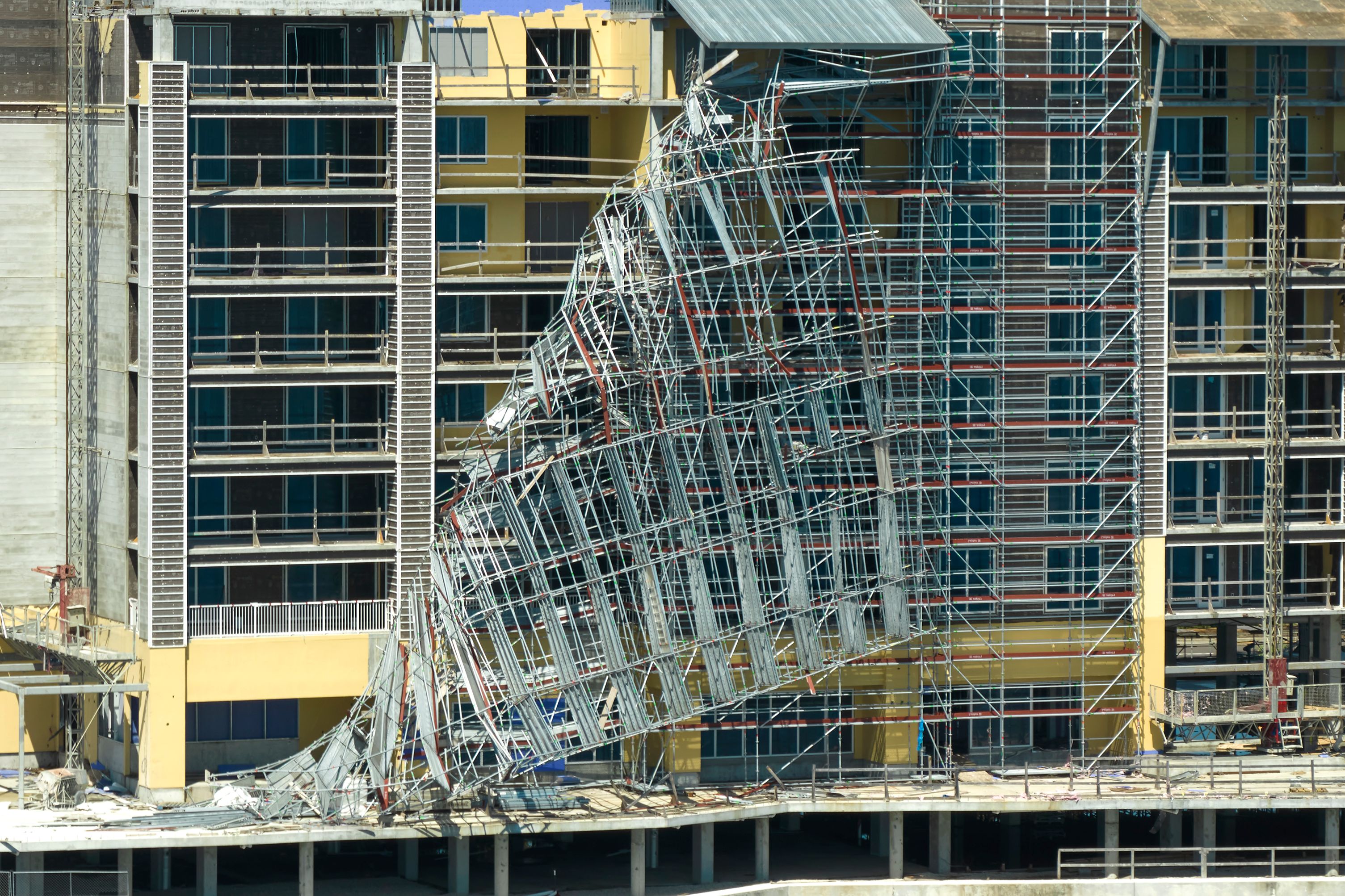
· Collapse or partial failure of erected scaffolding
· Unsafe access points linked to scaffolding installation
These claims often involve medical costs, loss-of-income claims, and legal action, which is why the limits of cover matter so much in scaffolding.
2. Third-Party Property Damage
Scaffolding work is often carried out on or around existing buildings, vehicles, footpaths, and neighbouring properties.
Public liability insurance may respond where your scaffolding activities cause damage to:
· Buildings or façades
· Windows, roofs, or structures
· Vehicles parked nearby
· Adjacent properties
Even relatively minor property damage claims can escalate once legal costs and dispute resolution are involved — particularly on commercial or strata-managed sites.
3. Legal Defence Costs
One of the most overlooked components of public liability insurance is legal defence.
If a claim is made against your scaffolding business — even if it’s ultimately unsuccessful — your insurer may cover:
· Legal representation
· Investigation costs
· Settlement negotiations
For scaffolders, where liability can be disputed between multiple trades or contractors, legal costs alone can be substantial.
What Public Liability Insurance Does NOT Cover for Scaffolders
This is where many scaffolders are caught out.
Public liability insurance is not a catch-all policy, and there are important exclusions that regularly cause issues when policies aren’t arranged correctly.
Typically, public liability insurance does not cover:
· Injury to your own employees (this falls under workers' compensation)
· Damage to your own scaffolding equipment
· Faulty workmanship where no injury or third-party damage occurs
· Contractual liabilities beyond standard legal responsibility
· Undisclosed high-risk activities or heights outside policy terms
This is why insurers insist on accurate disclosure around:
· Maximum working heights
· Types of scaffolding used
· Use of subcontractors or labour hire
· Nature of sites (commercial, residential, public access)
Misrepresenting or understating these details can result in reduced claims payments or outright claim denial, a risk no scaffolding business can afford.
Why “Standard” Public Liability Isn’t Enough for Scaffolders
A generic public liability policy designed for low-risk trades is rarely suitable for scaffolding.
Insurers offering scaffolding-specific cover structure policies differ because:
· Height exposure dramatically increases claim severity.
· Scaffolding failures often impact multiple parties at once
· Claims frequently involve shared or disputed liability.
This is why scaffolders are often declined, restricted, or heavily endorsed when attempting to use non-specialist policies.
Getting public liability insurance tailored specifically for scaffolding work is not a luxury — it’s a necessity if you want your cover to respond when it matters.
Why Scaffolders Are Classified as High-Risk by Insurers in Australia
Scaffolding Sits at the Top End of Construction Risk
In the Australian insurance market, scaffolding is not treated like a standard construction trade. Insurers consistently categorise scaffolders as high-risk operators, and that classification directly influences premiums, policy conditions, exclusions, and whether cover is offered at all.
This isn’t arbitrary. It’s based on a combination of loss history, claim severity, and exposure profile unique to scaffolding work.
Scaffolders don’t just work on construction sites — they create temporary structures that other trades, occupants, and sometimes the public rely on for access and safety. When something goes wrong, the consequences are rarely minor.
Height Exposure Drives Claim Severity
One of the first underwriting questions insurers ask scaffolders is about maximum working height.
The reason is simple:
The higher the scaffold, the greater the potential for:
· Serious injury
· Fatal incidents
· Multi-party claims
· Large legal settlements
Falls from height, falling objects, or structural failures at elevation dramatically increase the severity of claims, even if the frequency remains low.
From an insurer’s perspective, scaffolding claims are not just “more likely” — they are more expensive when they occur.
Scaffold Collapse Risk Affects Multiple Parties
Unlike many trades where an error affects one area or one party, scaffolding failures often affect multiple people at once.
A single incident can involve:
· Workers from other trades
· Members of the public
· Tenants or occupants
· Vehicles or nearby property
This creates aggregation risk — multiple claims arising from a single event — which insurers heavily price into scaffolding public liability policies.
Public Interface Increases Exposure
Scaffolding frequently operates:
· Near footpaths
· Around occupied buildings
· In shopping precincts
· On strata or council-managed sites
This public interface increases the likelihood that uninvolved third parties are exposed to risk. Insurers view this as significantly more dangerous than contained site work.
The moment the public is involved, claim costs escalate fast — medical expenses, legal representation, and compensation claims all multiply.
Shared Liability Creates Legal Complexity
Scaffolding claims are rarely straightforward.
Insurers are well aware that scaffolding incidents often involve disputes between:
· Scaffolders
· Builders
· Principal contractors
· Engineers
· Site managers
Determining fault can take months or years, driving up legal costs even before liability is established. Scaffolding work exposes businesses to claims that go beyond typical construction risks, which is why insurers carefully assess scaffolding risks and ensure public liability insurance covers incidents throughout the legal process, not just at settlement.
Why Some Insurers Refuse to Cover Scaffolders
Not all insurers are willing to insure scaffolding risks at all.
Many mainstream insurers:
· Exclude scaffolding outright
· Impose strict height caps.
· Decline risks involving public access
· Restrict cover where subcontractors are used.
This is why scaffolders often find themselves declined or quoted with restrictive endorsements when approaching non-specialist insurers.
Working with insurers and underwriters who understand scaffolding risks is essential — otherwise, cover may exist on paper but fail under real-world pressure.
Real-World Scaffolding Claims: How Public Liability Insurance Responds
Why Scaffolding Claims Are Rarely “Small”
Scaffolding claims tend to be low-frequency but high-severity. When they happen, they’re rarely minor incidents that resolve quickly.
Public liability insurance exists to protect scaffolders from exactly these situations — but only when the policy has been structured correctly.
Claim Scenario 1: Injury to a Third Party
A common scaffolding claim involves injury to a third party who is not employed by the scaffolding business.
Examples include:
· A member of the public struck by a falling scaffold component
· A contractor from another trade injured while using scaffolding access
· A tenant injured due to unsafe access around the erected scaffolding.
In these situations, public liability insurance may respond by covering:
· Medical and rehabilitation costs
· Compensation for loss of income
· Legal defence and settlement costs
These claims can easily escalate into six or seven figures, particularly when long-term injuries are involved.
Claim Scenario 2: Property Damage Caused by Scaffolding
Scaffolding structures often interact with existing buildings, façades, and surrounding property.
Claims may arise from:
· Damage to windows or roofs during erection or dismantling
· Scaffolding collapse, damaging vehicles or structures.
· Fixing points causing damage to building exteriors
Public liability insurance is designed to respond to third-party property damage, but insurers will closely examine:
· Whether work was performed within disclosed activities
· Whether the scaffolding design and installation were appropriate
· Whether exclusions or endorsements apply
This reinforces the importance of accurate disclosure at policy inception.
Claim Scenario 3: Legal Costs Even When You’re Not at Fault
One of the most misunderstood aspects of public liability insurance is that claims can arise even when the scaffolder believes they did nothing wrong.
Scaffolding incidents often result in:
· Allegations of negligence
· Cross-claims between contractors
· Disputes over responsibility
In these cases, public liability insurance may still respond by funding:
· Legal defence
· Investigations
· Representation during proceedings
Without this protection, scaffolders can face crippling legal costs before liability is ever determined.
Why Claims Fail When Policies Are Poorly Set Up
Many scaffolding claims run into trouble because:
· Maximum heights were understated.
· Subcontractor use was not disclosed.
· According to Comcare, insurers assess claims using established guidelines and principles, making it important that the information provided in the policy application, including the description of scaffolding work, matches what is actually stated in the policy. The scheme also highlights that if scaffolding work is not specifically disclosed or included in the policy, it may not be covered. Any discrepancies can increase the likelihood of reduced payouts or denial of claims.
The Bottom Line on Claims
Public liability insurance for scaffolding work—when it’s done properly.
But when policies are arranged cheaply, generically, or inaccurately, they often fail at the exact moment they’re needed most.
For scaffolders, claims aren’t theoretical risks. They’re known, documented exposures that insurers price and structure carefully for a reason.
How Much Public Liability Cover Do Scaffolders Really Need in Australia?
Why “Minimum Required” Is Rarely the Right Answer
One of the most common questions scaffolders ask is how much public liability insurance they actually need. In Australia, scaffolders will usually see options for $5 million, $10 million, or $20 million limits of indemnity — but choosing purely based on price is where many businesses expose themselves.
Public liability insurance is not about what you hope will happen. It’s about what happens when something goes wrong — and in scaffolding, when it goes wrong, it often goes very wrong.
$5 Million Cover: When It May Be Considered (And When It Isn’t)
A $5 million limit is often the entry-level option for scaffolding businesses. It may be accepted in limited circumstances, such as:
· Small-scale residential scaffolding
· Low-height work
· Sites with no public access
· Private projects with no council or principal contractor requirements
However, many insurers and principals view $5 million as insufficient for scaffolding risks due to the potential severity of claims.
A single serious injury claim involving long-term disability can easily exceed this limit once legal costs and compensation are factored in.
$10 Million Cover: The Market Standard for Scaffolders
For many scaffolding businesses in Australia, $10 million public liability insurance is considered the practical minimum.
This level of cover is commonly required by:
· Builders and principal contractors
· Commercial construction sites
· Strata and body corporate projects
· Sites with shared access between trades
Insurers often view scaffolders with $10 million limits more favourably, as it aligns better with the real-world exposure created by height-based work and public interaction.
$20 Million Cover: When Higher Limits Are Essential
Some scaffolding operations require $20 million public liability insurance, particularly where:
· Work is performed in public spaces.
· Council approvals are required.
· Projects involve high pedestrian traffic.
· Large commercial or infrastructure sites are involved.
In these environments, insurers recognise that a single incident can involve multiple injured parties, pushing claims well beyond lower limits.
Importantly, many councils and major contractors will not allow scaffolders on-site without a $20 million limit in place.
How Insurers Assess the “Right” Limit
Insurers don’t recommend limits arbitrarily. They assess:
· Maximum working heights
· Site environments
· Public exposure
· Turnover and scale of operations
· Past claims experience
The more complex or exposed the scaffolding work, the higher the limit insurers expect to see.
Choosing a limit that is too low doesn’t just increase financial risk — it can also restrict where and how you’re allowed to work.
Why Underinsurance Is One of the Biggest Risks for Scaffolders
Being underinsured doesn’t just mean higher out-of-pocket costs. It can mean:
· Losing contracts
· Being removed from approved contractor lists
· Personal financial exposure if limits are exhausted
Public liability insurance is meant to protect the long-term viability of your scaffolding business, not just satisfy a checkbox on a contract.
Common Mistakes Scaffolders Make with Public Liability Insurance
Mistake 1: Choosing Price Over Protection
Scaffolders are under constant pressure to keep costs down, but public liability insurance is one area where cutting corners is dangerous.
Cheaper policies often:
· Exclude key scaffolding activities.
· Impose strict height restrictions.
· Limit cover where public access exists
· Include endorsements that weaken claims outcomes.
What looks cheaper upfront can become devastatingly expensive after a claim.
Mistake 2: Incorrect or Incomplete Business Descriptions
Insurers rely heavily on how scaffolding activities are described.
Problems arise when:
· Scaffolders describe themselves too broadly.
· Heights are understated
· Types of scaffolding are not disclosed.
· Work environments are oversimplified.
If the policy wording doesn’t match the reality of your work, insurers may reduce or deny claims — even when premiums were paid in full.
Mistake 3: Not Disclosing Subcontractors or Labour Hire
Many scaffolding businesses use subcontractors or labour hire, especially during peak periods.
Failure to disclose this properly can:
· Breach policy conditions
· Void parts of cover
· Shift liability back onto the scaffolding business.
Insurers need to understand who is working under your control and how risk is managed across the workforce.
Mistake 4: Assuming All Public Liability Policies Are the Same
They’re not — especially for scaffolders.
Some public liability policies:
· Exclude scaffolding entirely
· Only allow incidental scaffolding.
· Cap maximum heights well below real-world requirements
Scaffolders who purchase generic construction policies often only discover these limitations after a claim occurs.
Mistake 5: Failing to Review Cover as the Business Grows
As scaffolding businesses grow, risk profiles change.
Turnover increases, projects become larger, and exposure expands. Failing to review public liability insurance as this happens can leave scaffolders operating with outdated and inadequate cover.
Insurance should adapt as a business grows and changes, not fall behind its needs. According to the Scaffolding Association Australia, SAA Insure is a purpose-built insurance facility designed specifically for the scaffolding industry in Australia.
Why These Mistakes Keep Happening
A report from the Scaffolding Association Australia notes that most of these issues are not caused by negligence. They stem from:
· Poor advice
· Lack of scaffolding-specific expertise
· Overreliance on online or off-the-shelf policies
Scaffolding is too specialised and too risky for generic insurance solutions.
How Insurers Assess Scaffolding Risks (And How to Get Better Terms)
Why Scaffolders Are Underwritten Differently
When an insurer assesses a scaffolding business, they are not simply issuing a public liability policy—they are pricing a complex risk profile. Scaffolding underwriting is far more detailed than that for many other construction trades because the consequences of failure are severe.
Insurers assess scaffolding risks based on the likelihood and potential size of claims, taking into account factors such as the maximum working height and the load rating of scaffold platforms. According to WorkSafe ACT, scaffold working platforms are classified as light, medium, or heavy duty depending on the weight they can safely support.ngest predictors of claim severity. Insurers want to know:
· The highest scaffold erected
· Whether work regularly exceeds certain thresholds
· If height exposure varies between projects
Higher disclosed heights generally mean:
· Higher premiums
· Stricter terms
· Fewer insurer options
But failing to disclose true heights can lead to far worse outcomes at claim time.
Type of Scaffolding Work Performed
Not all scaffolding is treated equally. Insurers assess:
· Commercial vs residential work
· Fixed vs mobile scaffolding
· Long-term installations vs short-duration projects
· Presence of public or tenant access
The broader and more exposed the work, the greater the underwriting scrutiny.
Turnover and Scale of Operations
Turnover is not just a pricing metric — it’s a proxy for exposure.
Higher turnover often means:
· More projects
· More sites
· More opportunities for incidents
Insurers expect public liability limits and risk controls to scale alongside business growth.
Use of Subcontractors and Labour Hire
Insurers pay close attention to:
· Who performs the work?
· Who controls site safety?
· Whether subcontractors carry their own insurance
Undisclosed subcontractor use is a common reason claims encounter difficulties.
Claims History
Past claims don’t automatically make cover impossible, but they do influence:
· Premium levels
· Excesses
· Policy terms
· Willingness to offer higher limits
Insurers look for evidence that lessons were learned and risks were addressed.
How Scaffolders Can Improve Their Insurance Terms
While scaffolding will always be a higher-risk trade, there are ways scaffolders can improve outcomes with insurers.
Providing clear, accurate information upfront helps insurers:
· Understand the true risk.
· Avoid worst-case assumptions
· Offer more competitive terms.
Insurers are far more comfortable pricing known risks than guessing at unknown ones.
Why Specialist Placement Matters
Many insurers decline scaffolding risks simply because they lack the appetite or expertise to underwrite them properly.
Specialist placement ensures:
· Policies are structured for scaffolding, not adapted from generic trades.
· Heights, activities, and exposures are correctly captured.
· Claims are assessed within the right risk framework.
For scaffolders, the policy can matter just as much as the insurer.
Public Liability vs Professional Indemnity vs Contract Works for Scaffolders
Why Scaffolders Often Confuse These Covers
Scaffolders frequently encounter multiple insurance requirements on contracts, and it’s easy to assume all policies overlap. They don’t.
Each policy addresses different risks, and misunderstanding their roles can leave serious gaps in protection.
Public Liability Insurance: Third-Party Injury & Property Damage
Public liability insurance is the foundation of scaffolding insurance protection.
It is designed to respond when:
· A third party is injured.
· A third party’s property is damaged.
· Legal action is taken against the scaffolding business.
This is the policy that responds when scaffolding work impacts people or property outside your business.
Professional Indemnity: Design, Advice & Specification Risks
Professional indemnity insurance is relevant where scaffolders:
· Provide design input
· Certify or specify scaffolding systems.
· Offer advice that is relied upon by others.
If a claim alleges that professional advice or design caused loss — even without physical damage — public liability insurance may not respond.
This is why some scaffolding operations require both covers.
Contract Works: Damage to the Work Itself
Contract works insurance protects the scaffolding materials and structures themselves while on-site.
This is different from public liability, which protects against damage to other people’s property.
Without contract works insurance:
· Damage to erected scaffolding may not be covered.
· Theft or accidental damage may fall outside the scope of public liability.
Each policy plays a distinct role and should be structured together, not in isolation.
Why Relying on One Policy Is Risky
Public liability insurance does not replace:
· Professional indemnity
· Contract works
· Workers compensation
Assuming it does can leave scaffolders exposed to uninsured losses that fall between policies.
A properly structured insurance program ensures each risk sits in the correct policy — and claims respond as intended.
Choosing the Right Public Liability Policy for Your Scaffolding Business
Why the “Right” Policy Is More Important Than the Cheapest One
For scaffolders, public liability insurance is not a commodity product. Two policies with the same limit of indemnity can behave very differently once a claim arises.
The right public liability policy for a scaffolding business is one that:
· Accurately reflects the work you actually do
· Is accepted by principals, builders, and councils
· Responds cleanly when a serious incident occurs
Many scaffolders only realise the difference after a claim — when it’s too late to fix.
What a Proper Scaffolding Public Liability Policy Should Do
A well-structured public liability policy for scaffolders should:
· Explicitly allow scaffolding activities.
· Reflect disclosed maximum working heights.
· Accommodate commercial and public-access sites where applicable.
· Cover legal defence costs as part of the limit.
· Avoid unnecessary exclusions or restrictive endorsements.
If scaffolding is treated as an “incidental activity” rather than the core business, that is a red flag.
Why Generic Construction Policies Often Fail Scaffolders
Many scaffolders are placed on policies designed for:
· Builders
· Trades
· General construction contractors
These policies may technically include public liability cover, but often:
· Exclude scaffolding above certain heights.
· Restrict use around the public.
· Fail to contemplate scaffold collapse scenarios.
In a serious claim, insurers assess whether the risk they accepted matches the risk that actually occurred. Generic policies frequently fall short in this test.
The Importance of Clear Occupation Descriptions
How your business is described in the policy schedule matters.
Descriptions such as:
· “Construction services”
· “General contracting”
· “Labour hire”
It can be problematic if scaffolding is not clearly stated.
A proper scaffolding policy should clearly identify:
· Scaffolding erection and dismantling
· Nature of projects undertaken
· Any relevant height exposures
Clarity at placement reduces disputes at claim time.
Why Scaffolders Benefit from Specialist Advice
Scaffolding insurance sits in a narrow and technical space within the Australian market. Insurers that understand scaffolding risk price it differently—and assess claims differently—than those that don’t.
Specialist placement helps ensure:
· Accurate disclosure
· Appropriate insurer selection
· Fewer surprises at claim time
For scaffolders, this can mean the difference between a claim being resolved smoothly and one becoming a prolonged legal dispute.
Why the Right Public Liability Cover Protects More Than Just Your Contract
Public liability insurance for scaffolders is not just about meeting contract requirements or gaining site access. It is about protecting your business's long-term survival in an industry where a single incident can change everything.
Scaffolding work carries real, recognised risks — height exposure, public interaction, shared liability, and complex claims environments. Australian insurers price these risks carefully because they understand how severe the consequences can be when something goes wrong.
The right public liability insurance:
· Protects your business against serious third-party claims
· Funds legal defence when liability is disputed
· Preserves your ability to keep trading after an incident
The wrong cover — or poorly structured cover — can leave scaffolders exposed at the exact moment they need protection most.
Ultimately, public liability insurance should give scaffolders confidence. Confidence to take on work, confidence to meet contractual obligations, and confidence that if the unexpected happens, their business is protected by a policy designed for the reality of scaffolding — not a watered-down version of it.
FAQs: Public Liability Insurance for Scaffolders (Australia)
What does public liability insurance cover for scaffolders in Australia?
Public liability insurance for scaffolders is designed to cover third-party personal injury and third-party property damage arising from scaffolding activities. This includes incidents such as injuries to members of the public, other contractors, or site visitors, as well as damage to surrounding buildings, vehicles, or structures caused by scaffolding work. It also typically covers legal defence costs if a claim is made against the scaffolding business.
Is public liability insurance mandatory for scaffolders?
While public liability insurance is not legally mandatory in every situation, in practice it is essential. Most builders, principal contractors, councils, and commercial site managers will not allow scaffolders on site without proof of adequate public liability insurance. Without it, scaffolders may be unable to secure work or access certain projects.
How much public liability insurance should a scaffolder have?
In Australia, scaffolders commonly hold public liability limits of $10 million or $20 million. Smaller residential operations may sometimes carry $5 million in limits, but this is increasingly viewed as insufficient given the potential severity of scaffolding claims. The appropriate limit depends on factors such as working height, public access, and contract requirements.
Does public liability insurance cover scaffold collapse?
Public liability insurance may respond to a scaffold collapse if the collapse results in third-party injury or property damage and the work was properly disclosed and covered under the policy. Claims can become problematic if scaffolding activities, heights, or site conditions were not accurately declared when the policy was arranged.
Are subcontractors covered under a scaffolder’s public liability policy?
This depends on how the policy is structured and what was disclosed to the insurer. Some policies may extend cover to subcontractors working under the scaffolder’s control, while others require subcontractors to carry their own insurance. Failure to disclose subcontractor use is a common cause of claim disputes.
Does public liability insurance cover damage to the scaffolding itself?
No. Public liability insurance covers damage to other people’s property, not your own scaffolding equipment. Damage to the scaffolding structure itself may require separate contract works or material damage cover.
Is public liability insurance the same as professional indemnity for scaffolders?
No. Public liability insurance covers physical injury and property damage to third parties. Professional indemnity insurance relates to claims arising from design, advice, or specification errors. Scaffolders involved in design or advisory roles may require both policies to avoid gaps in cover.
Why do insurers ask so many questions about scaffolding work?
If your scaffolding work changes during the policy period, SAA Insure is specifically tailored to protect your business by accommodating your unique risk profile and activities, according to information from SAA Insure.
If your scaffolding business expands, takes on higher-risk work, or changes the nature of the projects it undertakes, your insurer should be informed. Public liability insurance should reflect the current reality of your operations, not how the business looked twelve months ago.
Can a claim be denied even if I have public liability insurance?
Yes. Claims may be reduced or denied if:
· Scaffolding activities were misdescribed.
· Heights exceeded disclosed limits.
· Excluded activities were involved.
· Policy conditions were breached.
This is why correct placement and ongoing review are critical for scaffolders.
Get Your Scaffolding Cover Reviewed Properly
If you’re relying on a generic public liability policy — or you’re unsure whether your scaffolding activities, heights, or site exposures are fully covered — now is the time to review it. Public liability insurance for scaffolders should be tailored, not guessed. A proper review can identify gaps before they turn into costly problems.
Speak to a Scaffolding Insurance Specialist
Scaffolding risks are too complex for one-size-fits-all insurance. If you want a cover that stands up when it’s tested — not just when it’s quoted — speak with a specialist who understands scaffolding, insurer expectations, and real-world claims. Getting this right protects more than your contract — it protects your business.
Final Word
Public Liability Insurance for Scaffolders: What It Really Covers & Why You Need It isn’t just an insurance topic — it’s a business survival issue. When scaffolding incidents occur, they happen quickly, involve multiple parties, and carry serious financial consequences. The right insurance doesn’t remove risk — but it makes sure risk doesn’t remove your business.